
Posted on August 27, 2026 by Katelyn Juarez
How two immersive fellowships reshaped one department chair’s approach to teaching and leadership

American Association of Blacks in Higher Education Leadership and Mentoring Institute Cohort 2026
This summer, Alonzo M. Flowers III, PhD, completed two fully funded opportunities focused on leadership development and identity education. The first was the Leadership and Mentoring Institute (LMI) fellowship, designed for senior leaders. The second was the Fourth Annual Fellowship and Summer Institute on Antisemitism and Jewish Identity in Educational Settings at George Washington University, which equips faculty and administrators with context and knowledge and context around issues facing Jewish communities on campuses today.
“This summer I wanted to focus on my internal leadership development and learn different skills,” said Flowers, professor and department chair in the Department of Educational Leadership and Policy Studies (ELPS).

The leadership institute emphasized vulnerability and reflection. Participants were asked, “What do you need in this moment?” The question prompted both personal and professional introspection.
“No one has ever asked me that at this level of my career,” Flowers said. “I ask my students that, I ask my faculty that, my staff, but no one’s ever asked me. It was impactful in those two ways, professionally and personally.”
The identity-focused fellowship shifted how Flowers thinks about belonging and curriculum. The program included a visit to the United States Holocaust Memorial Museum in Washington D.C., and a one-on-one conversation with a 96-year-old Holocaust survivor.
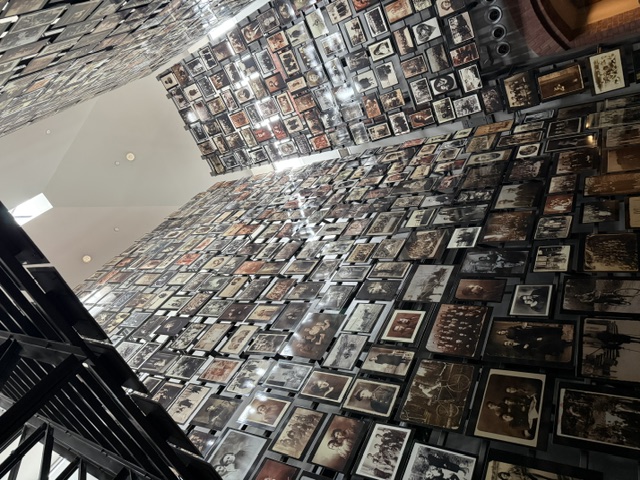

The experiences are already reshaping Flowers’ pedagogy.
“I talk a lot about my methods instruction, particularly as a qualitative researcher, and how engaging live storytelling, and using that as a way to relive and refocus on stories that have historical and cultural importance, was really impactful,” Flowerssaid.
Another moment that broadened his perspective came during a session cooking Palestinian food.
“These experiences have refocused my pedagogical thinking, that it doesn’t have to be an in-the-class, sit-and-listen kind of structure,” Flowers said.
As the new semester begins, the impact is clear. Flowers plans to integrate elements of storytelling into his qualitative research course.
For the ELPS department, the ripple effects include broader research agendas and refreshed course design. For students, it promises richer classroom experiences grounded in lived stories and cross-cultural understanding.
The fellowships, Flowers said, were life changing.
“We work so quickly through problems, and some semesters we don’t get a chance to sit down and really reflect inwardly on who we are, why we’re doing this work, and why it’s important,” Flowers said.
Those reflections, he added, are now moving into classrooms, meetings, and across the college.
— Katelyn Juarez
