
Posted on October 22, 2026 by Katelyn Juarez
A project led by José Martínez Hinestroza will bring children, teachers and parents into research on how language practices shape participation in bilingual math classrooms, with the goal of helping educators recognize and support students’ mathematical thinking.

A teacher smiles as she helps a girl write math problems on a whiteboard, while another student looks on
José Martínez Hinestroza, PhD, associate professor in the Department of Bicultural-Bilingual Studies/Rae, Ethnicity, Gender and Sexuality Studies in the College of Education and Human Development and the Department of Mathematics in the College of Sciences, received a grant through the Spencer Foundation’s racial equity program to study how language and race affect the way students’ mathematical ideas are heard and valued in bilingual classrooms.
The project, “A Participatory Approach to Disrupting Raciolinguistic Ideologies in Bilingual Mathematics Classrooms”, is expected to run from fall 2026 through spring 2028. It will focus on raciolinguistic ideologies, or beliefs about language that are racialized in nature. Martínez Hinestroza said those beliefs can lead adults to judge how students communicate rather than attend to the meaning of what they are saying.
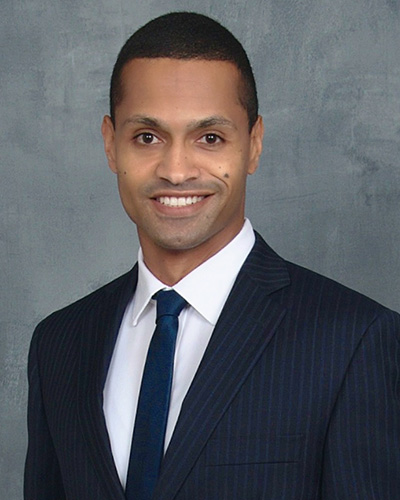 “In many of those classrooms, I often see brilliant math ideas and creative ways of developing and communicating those math ideas,” Martínez Hinestroza said of his experience in bilingual classrooms. “But unfortunately, the educational policies and guidelines from schools sometimes make those ideas invisible.”
The research will unfold in three overlapping stages. First, Martínez Hinestroza plans to gather stories from children, teachers and parents. The approach, testimonios, invites people to share experiences of resistance and marginalization.
In the second stage, Martínez Hinestroza and participating teachers will work together to analyze the material. Possible approaches include concept mapping and found poetry. The analysis will help the group understand how children, teachers and parents experience and respond to language expectations in math classrooms.
The final stage will use what the group learns to co-design and teach lessons that challenge restrictive assumptions about how mathematical ideas should be communicated. That could include listening more attentively to students’ explanations, using language in ways that differ from conventional classroom norms or adapting language found in textbooks.
The project is participatory, meaning the teachers and children will contribute to the research rather than simply be studied. “I’m not doing research on the kids and on the teachers, but I’m doing research with them,” Martínez Hinestroza said.
Five elementary school teachers will take part in the research. Martínez Hinestroza said he selected them based on prior work together and their interest in challenging language ideologies. Some have experience as participant researchers, including collaborating on data analysis and sharing research at academic conferences.
Martínez Hinestroza said the project aims not only to identify how language expectations can marginalize students, but also to show how educators can respond. “Hopefully our findings will enhance and strengthen previous arguments about the nature of mathematical language and mathematical communication,” he said. He added that he hopes the work will demonstrate how teachers can support children’s ideas through more open and flexible approaches to language.
Martínez Hinestroza encourages teachers to question guidelines that may limit how students participate and express their thinking. “My suggestion is for teachers to pause, question those things or guidelines, and talk to people around them to perhaps come up with alternatives,” he said.
Ultimately, Martínez Hinestroza said, “The project is about making sure students’ mathematical thinking is recognized. When educators overlook a child’s way of communicating,” he said, "They risk sending the message that the child’s ideas do not matter.”
— Katelyn Juarez
