
Posted on May 13, 2026 by Katelyn Juarez
First-Generation Student Balances Service and Scholarship
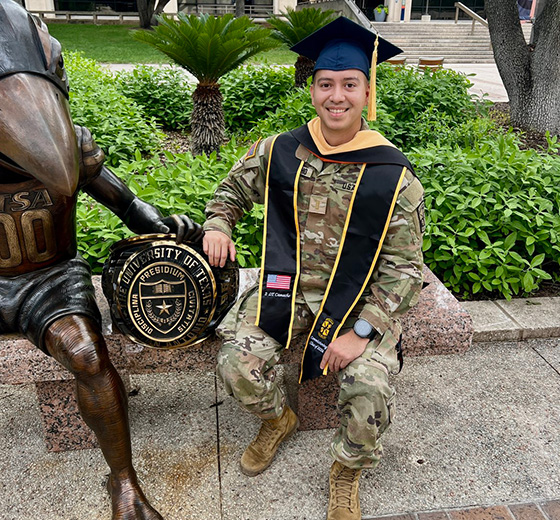
Carlos Camacho
Carlos Camacho ‘24 is a first-generation and transfer student earning a master’s degree in Bicultural-Bilingual Education. He works as a graduate assistant in the Honors College while also serving in the Army and with The University of Texas at San Antonio Army ROTC. Camacho will soon commission as a Second Lieutenant in Air Defense Artillery and hopes to combine his military service with a career in education teaching bilingual students.
Why did you choose The University of Texas at San Antonio to pursue your education?
It felt like the right fit because of the people and institutional support I witnessed firsthand. I work in the Honors College and saw how staff and faculty engaged with students – their enthusiasm for mentoring, teaching, and supporting students helped me envision a career in higher education or educational outreach. The Bicultural-Bilingual education program appealed to me specifically because it ties directly to my Spanish language skills and bicultural background. 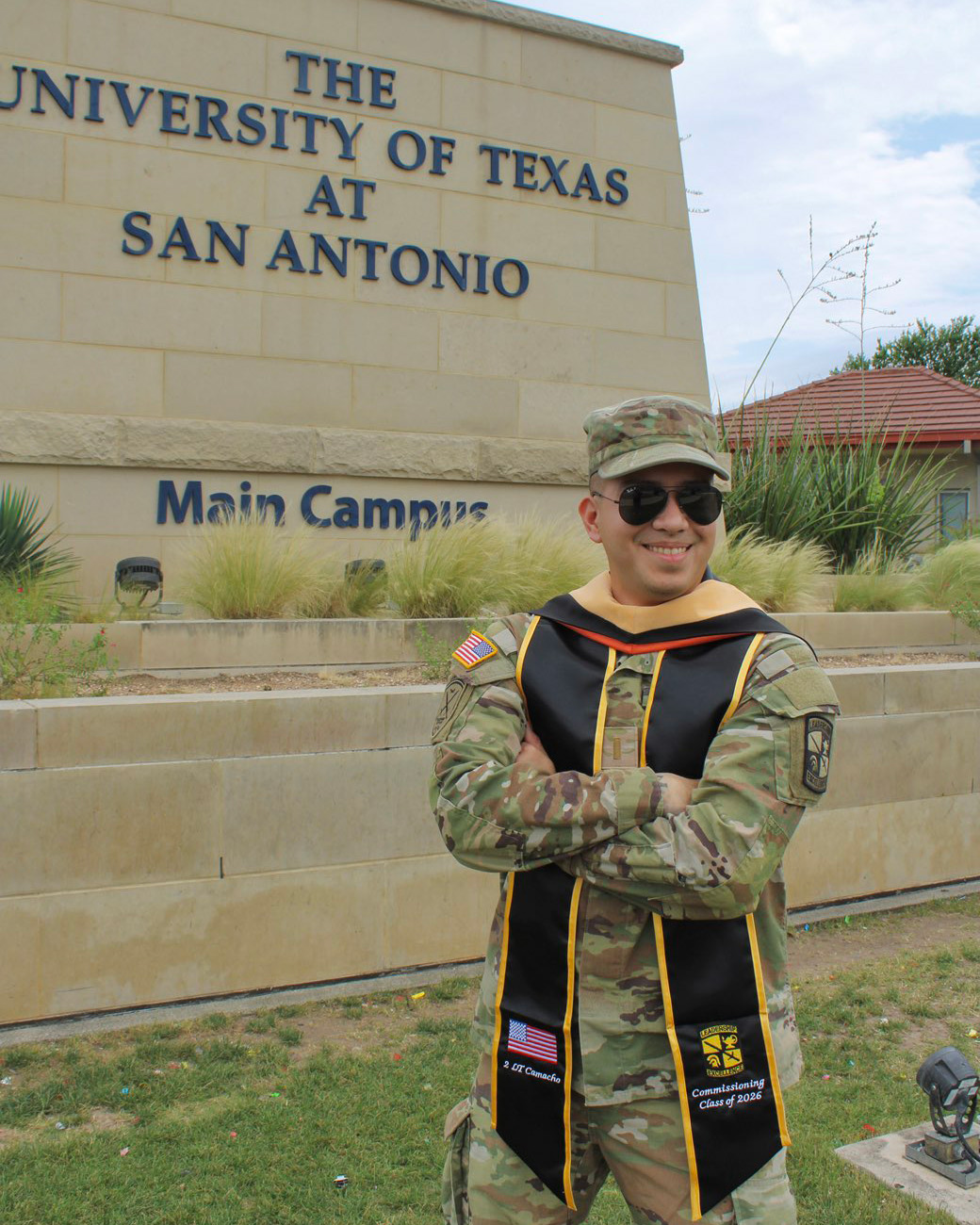
Why did you decide to join the Army?
Military service runs in my family – my father worked in law enforcement and Border Patrol, and other relatives served in the military—so I grew up around that culture and saw the profession’s values and routines. I initially planned to enlist after high school, but my parents encouraged me to pursue a degree first, so I would have credentials to rely on when or if I separated from service. I completed my undergraduate degree in Criminal Justice, then pursued the Army ROTC while also choosing to pursue a master’s degree.
How have you balanced your duties as a soldier and being a graduate student?
Balancing graduate coursework, field duties, and ROTC responsibilities has been challenging. Graduate school demands more research, writing, and higher-level academic expectations, while military duties require being in the field and leadership responsibilities for large groups. Key strategies I used in balancing these roles included open communication with professors about military commitments, relying on peers for coverage when needed, and leveraging university support systems. Within ROTC, being a senior cadet meant also mentoring other cadets and taking on program responsibilities. My leadership experience complemented my academic obligations but required deliberate planning and honest conversations with instructors and supervisors to manage workloads.
Have any university resources or groups been helpful to you as both a soldier and a student?
The university’s Veteran Affairs Office has been especially helpful, offering guidance on benefits and advising cadets about entitlements and educational support. Their representatives have held sessions for cadets and served as a reliable resource for navigating post-contract benefits. University Athletics has also partnered with ROTC on various projects and activities. Overall, the university's support has made balancing academic and military responsibilities much more manageable.
Who has had the greatest impact on your academic journey?
Dr. Gilberto Lara and Dr. Jorge Solís provided encouragement and worked with me when military commitments made degree completion seem difficult. After transferring to the university, the Honors College staff also played a critical role in providing feedback on assignments, moral support, and practical advice, which was crucial as a first-generation student navigating unfamiliar processes. 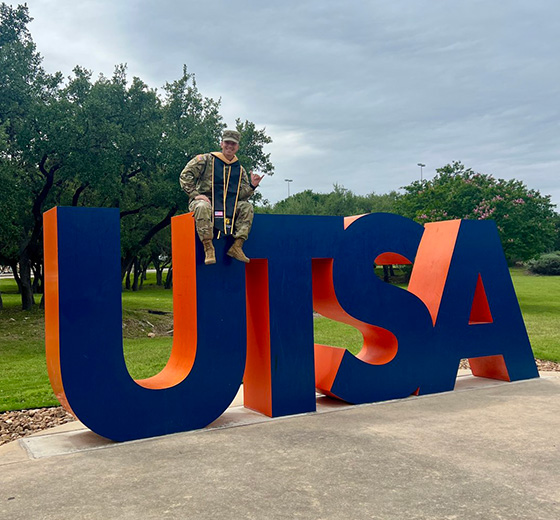
What are your plans following graduation?
My aspiration is to teach in the field of Bicultural-Bilingual education, ideally leveraging my Spanish language skills and cultural background. I’m particularly interested in teaching military-connected populations. Military assignments will shape the timing and location of when and where I can teach. After graduation, I will commission as a Second Lieutenant and report to Fort Sill for Air Defense Artillery officer training.
— Katelyn Juarez
