
Posted on March 17, 2026 by Katelyn Juarez
A 22-year mission to prepare teachers
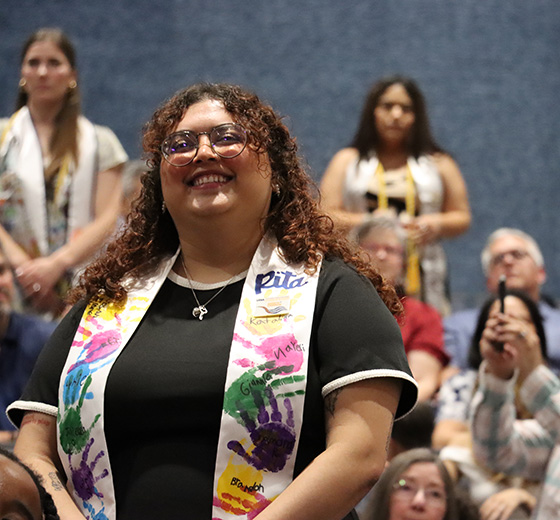
A graduate recites the Teacher Affirmation during the New Teacher Induction Ceremony.
Helping to advance the mission of the College of Education and Human Development, a transformation in teacher preparation has been taking shape for more than two decades. The Academy for Teacher Excellence Research Center (ATE) has become a beacon of innovation, transforming how teachers are prepared, supported and empowered to make a lasting impact in their communities.
Central to the ATE’s work is a simple vision: preparing teachers who can reach every student. To achieve this, it taps into the strengths of both the university and the broader community, creating opportunities that connect future educators with real classrooms and students.
The University of Texas at San Antonio is the city’s leading university-level producer of certified teachers, graduating nearly 200 each year. ATE serves not only current students of the college but also practicing teachers in our community, ensuring both groups receive the preparation and ongoing support they need to thrive. Through partnerships with community colleges, local agencies and school districts, ATE weaves together a network of support that strengthens both educators and the communities they serve.
A Vision Takes Root
The story for the Academy for Teacher Excellence began in 2003, when faculty member Belinda Bustos Flores collaborated with San Antonio College and her peers to secure funding for its creation. Flores is widely regarded as one of the most influential leaders in education and bicultural-bilingual studies. She is now professor emerita in the college’s Department of Bicultural-Bilingual Studies.
Flores received a Title V grant from the U.S. Department of Education. Her vision went beyond traditional teacher preparation. As ATE’s founder and first director, she sought to build a comprehensive system that nurtured educators and their students.
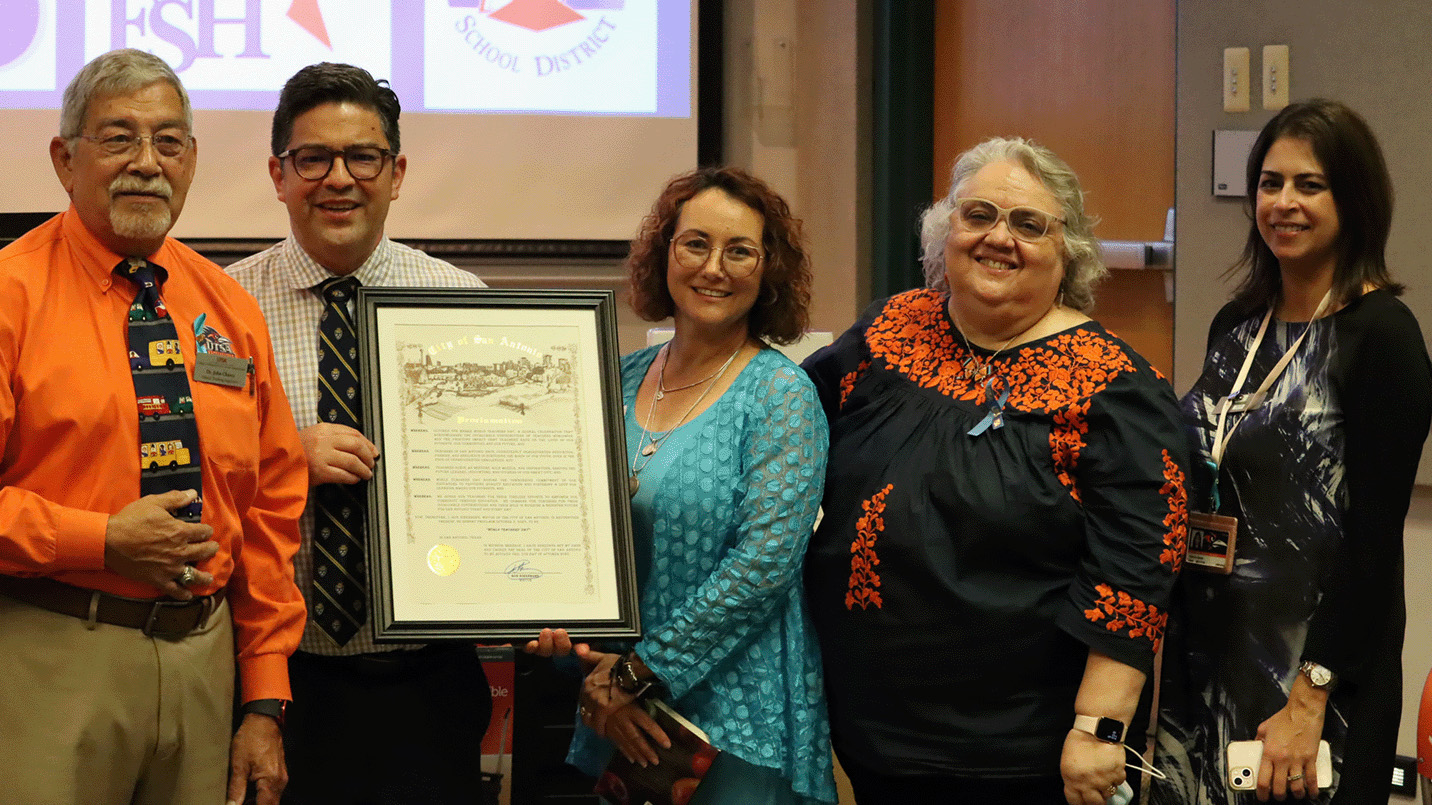
“We aren’t just preparing teachers,” said Lorena Claeys, ATE’s director. “We are nurturing entire educational ecosystems.”
From the beginning, ATE helped position the college as a national leader in preparing teachers to serve various student populations. Since its founding, ATE has been fully supported by grants from federal, state and private agencies, a testament to its ongoing innovation and impact.
Redefining Teacher Preparation
As ATE evolved, Flores was invited by her dean to take on a new challenge to reimagine the clinical teaching experience. “I already have ideas,” she said with enthusiasm. The teacher preparation program had followed the same model, and this opportunity opened the door to fresh approaches that could better prepare future educators.
One of the most significant changes she introduced was extending clinical teaching to a year-long experience. “Research showed that a semester simply was not enough,” Flores explained. “We wanted our teacher candidates to witness the full cycle of a school year, from the first day of class to the last.”
The shift deepened learning and strengthened partnerships with local school districts, ensuring candidates entered the profession fully prepared.
Building Support Systems for Success
ATE’s work goes far beyond the classroom. ATE offers a wide range of student support, including a learning community, a textbook loaning library, teacher certification exam preparation, college and career transition guidance, and mentorship opportunities.
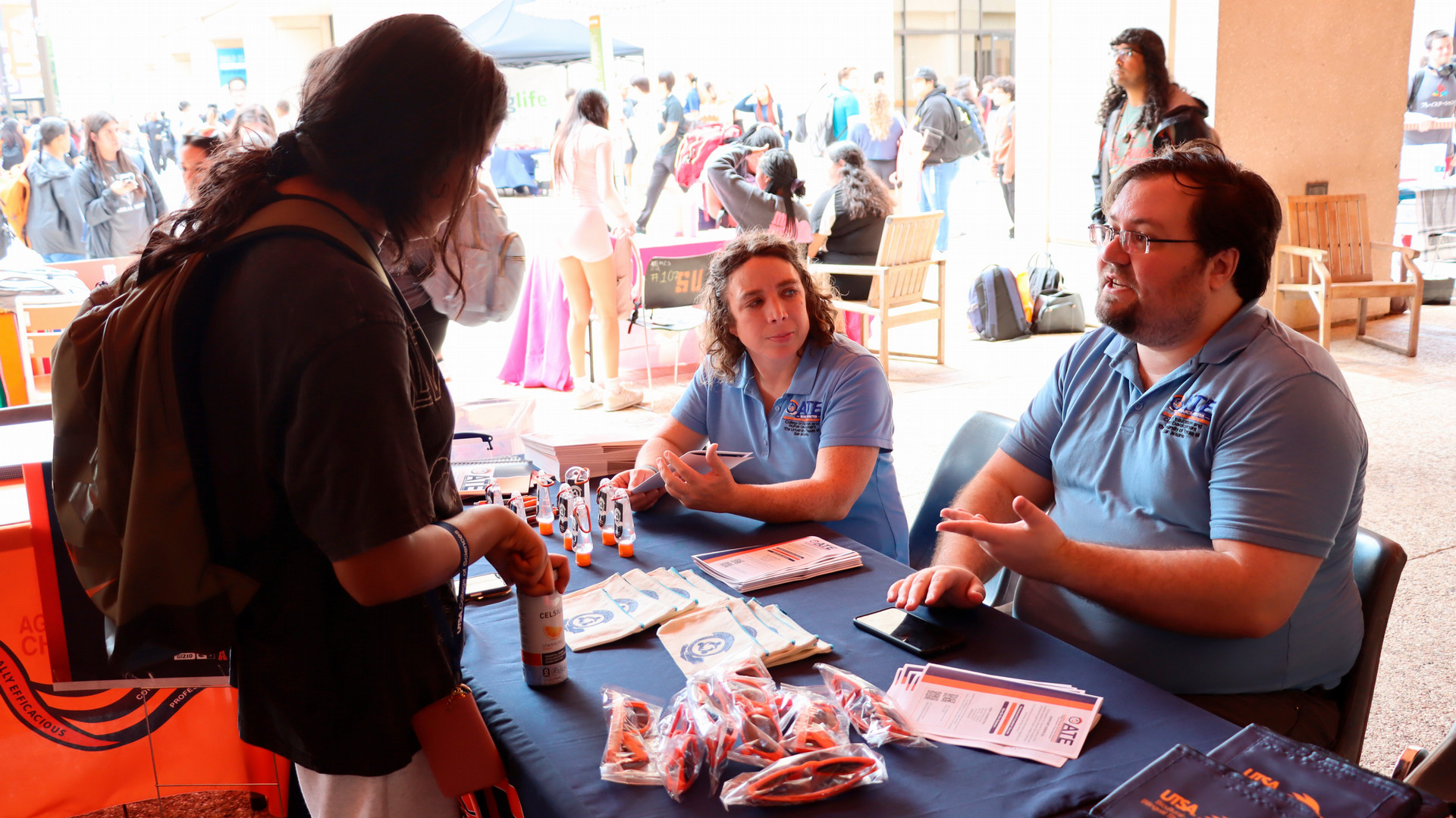
Founded in 2022 by Flores and faculty colleagues, one initiative was created with external grant funding from City Education Partners to increase the number of male teachers of color in Texas. At the time, male teachers made up only 24% of the Texas teacher workforce, according to the Texas Education Agency.
“Through our program, we’re not just supporting teacher candidates, we are building a comprehensive pathway for minority male educators that begins with high school students and extends through early career mentorship,” said Xavier Loredo, the initiative’s program coordinator.
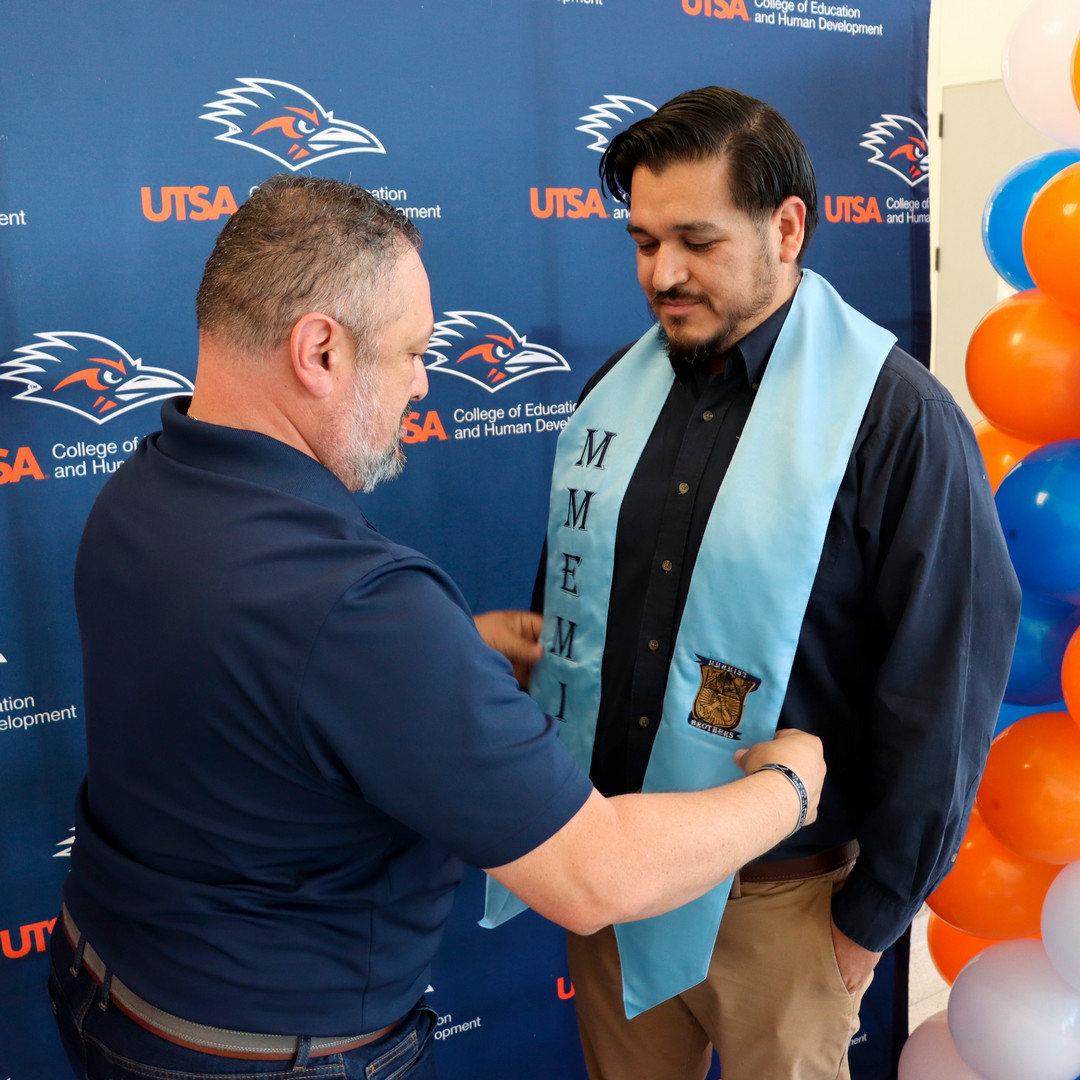
To date, the initiative has helped guide more than 75 teacher candidates to become certified educators, providing support, book lending, and fully funded certification exam fees.
“Being part of this program feels like a brotherhood,” said Jared Kellman-Medina ‘25. “The support from other men in education helped me grow, share experiences, and create a safe environment for my future students.”
Looking ahead, the initiative plans to launch a mentorship network that pairs early-career teachers with experienced mentors, offering stipends and professional development to promote long-term success.
A Holistic Approach to Education
ATE’s approach to preparing future educators is holistic, addressing not only academic growth but also their psychological and emotional development.
“Becoming a great teacher is about more than lesson plans and classroom management,” Claeys explained. “It’s about understanding yourself, your students and your community.”
ATE’s early years were marked by strong partnerships, particularly with San Antonio College, to create seamless transfer pathways and student-centered learning communities. Support services helped remove barriers and ensure student success.
Programs like the Summer Bridging Institute further extended ATE’s impact by offering free, intensive professional development to help teacher candidates transition confidently into the classroom and to support current teachers in their ongoing growth.
Community engagement has also been central to ATE’s mission. ATE actively partners with local school districts and community organizations to host workshops on topics ranging from navigating the college application process to using AI in the classroom and technology at home.
A Legacy of Innovation
Now retired, Flores leaves behind a remarkable legacy. What began as a small grant-funded project has grown into an institutional model of educational excellence.
“We always listened to our students,” Flores recalled. “Their needs guided our innovation.”
Today the Academy for Teacher Excellence continues to embody compassion, innovation and a deep understanding of community needs.
As Claeys put it best, “We are not just preparing teachers. We are preparing the future.”
— Katelyn Juarez
To support ATE and the impactful work they continue to lead, register by March 31 to attend Noche de Florecimiento. This event helps advance character development, educational initiatives, and scholarhsips for students of the college.
View this story, along with the rest of the second issue of Somos, by visiting ISSUU. Somos is the annual publication of the College of Education and Human Development at The University of Texas at San Antonio. It is created for students, alumni, faculty, staff and friends of the college. The magazine highlights the achievements, partnerships, and goals of the college.
